RTX’s Blue Canyon Technologies Provides Satellite for NASA’s Pandora Mission
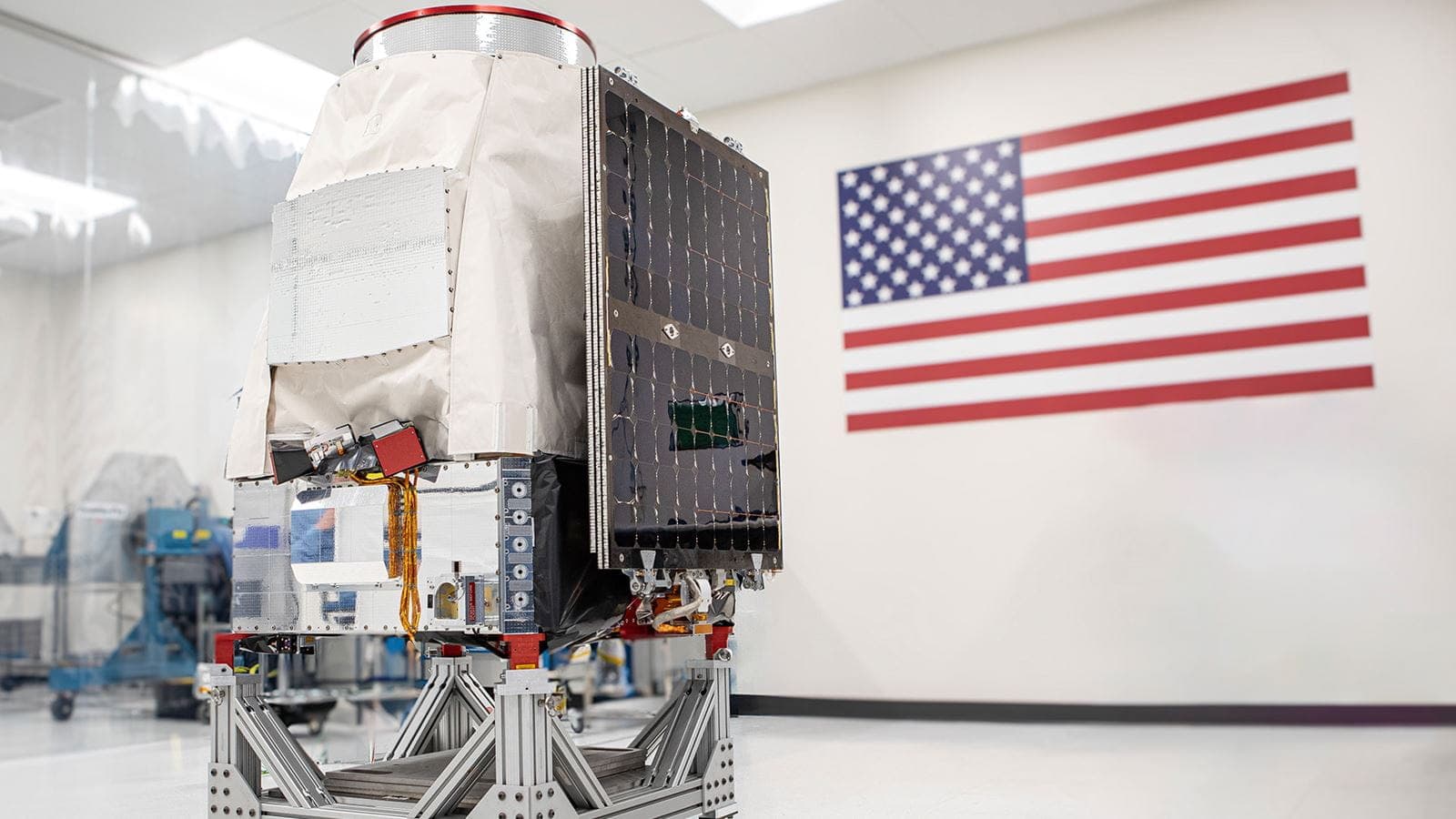
A Saturn-200 minisatellite built by Blue Canyon Technologies—RTX’s small satellite manufacturer and mission services provider—has successfully launched this week, marking a key milestone in support of NASA’s Pandora mission. The mission is dedicated to unlocking new insights into the atmospheres of exoplanets—planets orbiting stars beyond our solar system—and better understanding the behavior of the stars they circle.
Pandora is designed to deepen scientists’ understanding of distant worlds by closely examining how planetary atmospheres interact with starlight. Central to the mission is the study of planetary transits, events that occur when a planet passes in front of its host star from Earth’s perspective. During a transit, the star’s light dims slightly as the planet moves across its face. More importantly, a portion of that starlight filters through the planet’s atmosphere, where it is absorbed and scattered by atmospheric gases.
By precisely measuring these subtle changes in light, Pandora will allow astronomers to identify the chemical composition of exoplanet atmospheres and evaluate whether they could support conditions favorable to life. The mission plans to conduct detailed observations of at least 20 exoplanets, with a particular focus on worlds whose atmospheres are dominated by hydrogen or water—key indicators in the search for potentially habitable environments.
At the heart of the mission is Blue Canyon Technologies’ Saturn-class spacecraft platform, which is hosting the largest telescope payload ever integrated onto a Blue Canyon satellite. This represents a significant technical achievement, combining compact spacecraft design with the demanding requirements of high-precision astronomical observation.
“Pandora features the largest telescope payload ever integrated onto a Blue Canyon spacecraft,” said Chris Winslett, general manager of Blue Canyon Technologies. “Our Saturn-class platform, equipped with advanced guidance, navigation, and control systems, will provide the precision pointing and stability critical to the success of this important mission.”
Such precision is essential for Pandora’s science objectives. Observing exoplanet transits requires exceptional stability and accurate pointing to capture minute variations in starlight over extended periods. The Saturn-200 minisatellite delivers this capability, ensuring the telescope can remain locked on its stellar targets with the accuracy needed to collect high-quality scientific data.
Pandora is a program under NASA’s Science Mission Directorate, led by NASA’s Goddard Space Flight Center and managed by Lawrence Livermore National Laboratory. Beyond supplying the satellite bus, Blue Canyon Technologies also supported launch vehicle integration and conducted post-launch bus commissioning, helping ensure the spacecraft’s systems are fully operational in orbit.
The successful launch of Pandora further strengthens Blue Canyon’s track record in small satellite missions. With this milestone, the company has now launched a total of 87 spacecraft, underscoring its growing role in enabling high-impact scientific and national missions through reliable, high-performance small satellite platforms.
As Pandora begins its journey, the mission promises to expand humanity’s understanding of distant planetary systems—bringing scientists one step closer to answering fundamental questions about the nature of exoplanets and the potential for life beyond Earth.