U.S. Navy's P-8 Poseidon Patrol Jet Flies Unusual Presidential Security Mission Over Miami
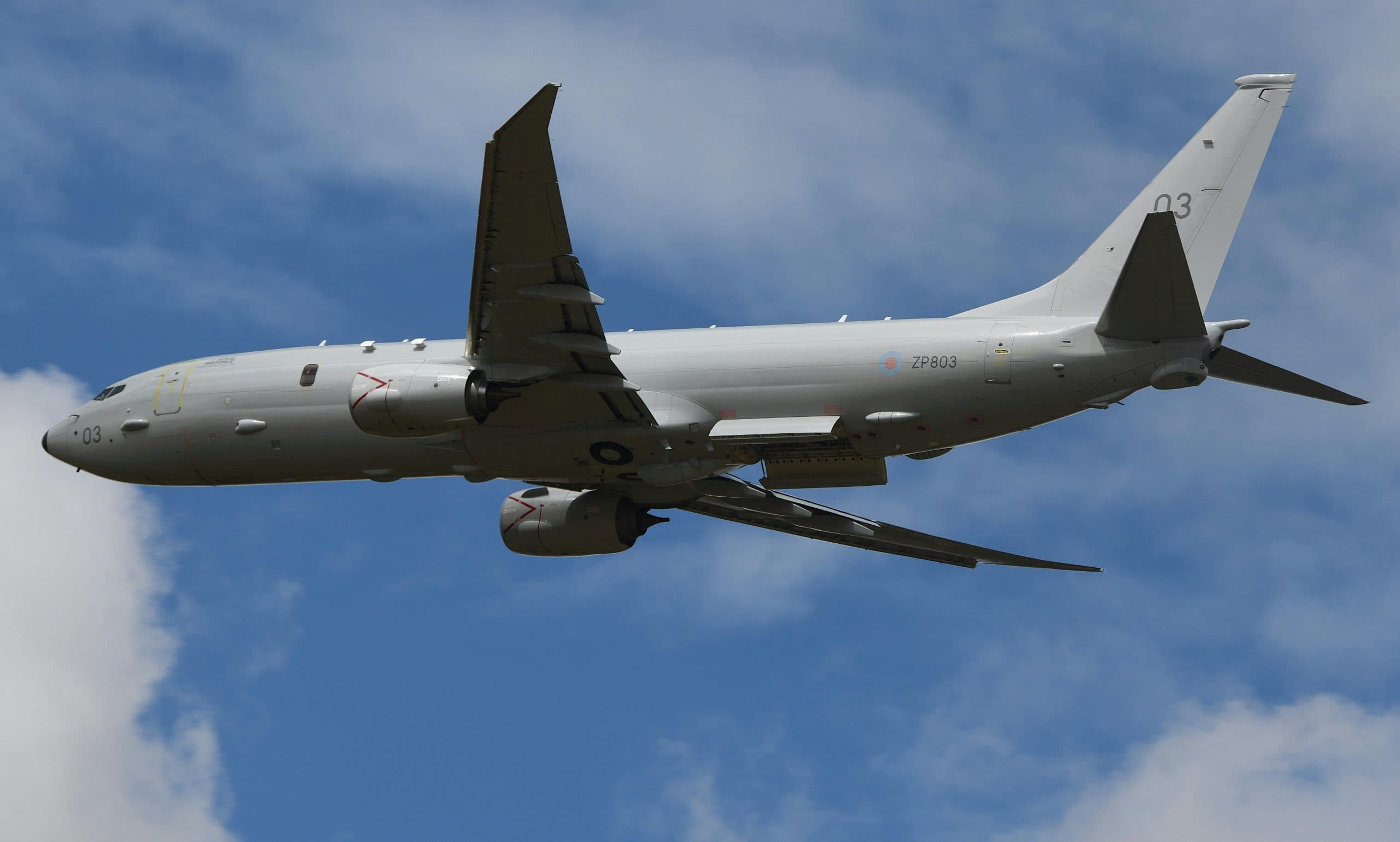
A U.S. Navy P-8 Poseidon maritime patrol aircraft, a plane typically used for hunting submarines, was called upon for a highly unusual duty: providing airborne security for President Donald Trump during a college football championship game in Miami. The jet, operating under callsign JULIET ECHO 191, flew a Combat Air Patrol (CAP) mission on January 19, showcasing the versatile aircraft’s expanding role in domestic security operations.
Imagine a 150-ton, jet-powered sub-hunter circling a packed football stadium. That was the scene over Miami Gardens as a Navy P-8 Poseidon executed a rare presidential security flight. The mission, reported by The War Zone, provided “incident awareness assessment (IAA) support” for the United States Secret Service (USSS) while President Trump attended the College Football Playoff National Championship at Hard Rock Stadium.
So, why use a Navy patrol plane for this job? “IAA involves the use of Department of Defense assets to provide situational awareness in support of domestic operations,” a spokesperson for U.S. Northern Command (NORTHCOM) explained to The War Zone. While aircraft from the Department of Homeland Security are more common for such tasks, the P-8’s powerful sensor suite made it a capable stand-in. A NORTHCOM spokesman noted that using a P-8 for presidential CAP “doesn’t happen very often.”
The flight, first spotted by open-source aircraft trackers, originated from Naval Air Station Jacksonville. According to flight-tracking data, the Poseidon conducted orbits at 18,000 feet about 30 miles north of the stadium before descending to as low as 3,700 feet for closer passes near the venue around the time of the President’s arrival. This lower-altitude pattern provided a prime vantage point for its sophisticated cameras.
At the heart of the P-8’s suitability for this mission is its formidable intelligence-gathering package. The aircraft is equipped with a Wescam MX-20HD electro-optical/infrared turret capable of streaming high-definition full-motion video. “The P-8 can provide overwatch capabilities fitting into the requirements of an IAA,” stated the report. This allows operators to monitor large areas for ground-based threats or suspicious activity in real-time, a critical need for an event with tens of thousands of attendees.
The choice of asset may also have been influenced by heightened threat levels. The War Zone reported that security planning occurred amidst public threats from Iranian officials against the former President, adding an extra layer of complexity to the protective mission. While the P-8’s primary tools are for maritime surveillance, its synthetic aperture radar and electronic surveillance measures (ESM) suite can be equally effective over land, potentially detecting everything from unauthorized drones to unusual communications.
This event underscores the P-8 Poseidon’s transformation from a specialized submarine chaser into a multi-role intelligence and surveillance platform. While the Navy retired its older P-3C Orion aircraft, which were occasionally used for similar duties in the past, the P-8 has taken on an even broader set of missions around the globe. From tracking surface ships to providing overwatch for a presidential motorcade, the militarized 737 derivative proves its value time and again.
The successful Miami mission demonstrates the flexibility of modern U.S. military assets and the intricate, multi-agency planning required to protect a president on the move. It’s a vivid reminder that security in the sky above major public events can come from unexpected quarters—even from a naval aircraft designed to patrol the deepest oceans.