GE Aerospace, Lockheed Martin Demonstrate Rotating Detonation Ramjet for Hypersonic Missiles
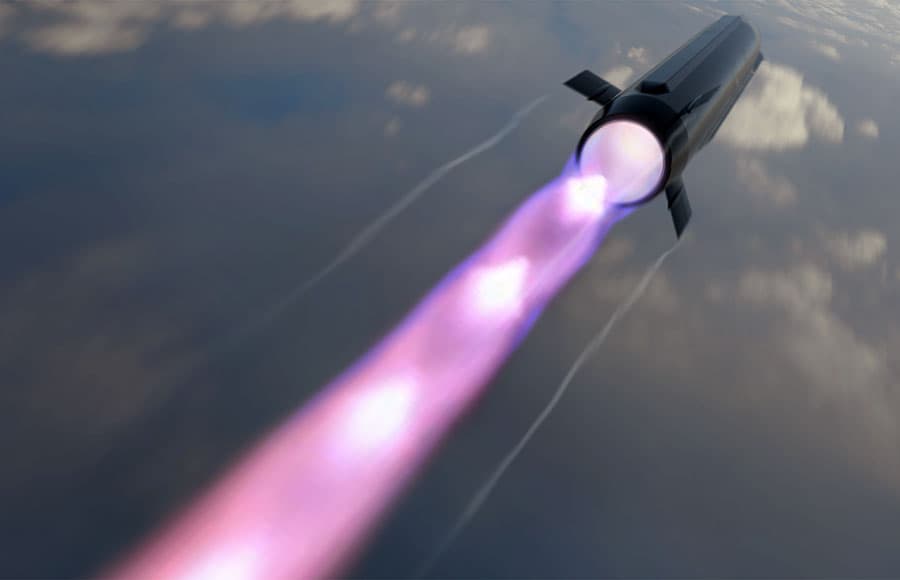
GE Aerospace and Lockheed Martin have reached a major milestone in hypersonic propulsion, successfully completing a series of engine tests that validate the use of a liquid-fueled rotating detonation ramjet for hypersonic missile applications. This achievement marks the first initiative delivered under a broader joint technology development agreement between the two aerospace leaders and signals a meaningful step forward in next-generation air-breathing propulsion.
The tests demonstrated not only technical feasibility but also the performance advantages of this emerging propulsion concept, paving the way for faster, longer-range, and more affordable hypersonic weapons.
Why It Matters: Speed, Range, and Affordability
Hypersonic systems demand propulsion technologies that can operate efficiently at extreme speeds and altitudes. The rotating detonation ramjet tested by GE Aerospace and Lockheed Martin addresses these challenges head-on.
Its compact architecture reduces engine size and weight, freeing up valuable space for additional fuel or payload while simultaneously lowering manufacturing and lifecycle costs. Improved fuel efficiency and thrust generation significantly extend missile range, enabling engagement of high-value, time-sensitive targets at unprecedented distances.
Another critical advantage lies in ignition. Because the system can ignite at lower speeds than conventional ramjets, it requires smaller boosters to initiate flight. This reduces overall system complexity, cost, and launch mass—key considerations for scalable hypersonic weapon deployment.
How It Works: Detonation, Not Deflagration
Unlike traditional ramjet engines that rely on steady combustion, the rotating detonation ramjet uses continuous detonation waves to burn fuel and air. These detonation waves travel rapidly around an annular combustion chamber, producing higher pressure and more efficient energy release than conventional combustion methods.
This approach generates exceptional thrust for supersonic and hypersonic flight while maintaining a smaller engine footprint. The result is a propulsion system that delivers high performance without the penalties of increased size or weight, directly translating into extended range and operational flexibility.
Strategic Perspectives from Industry Leaders
“GE Aerospace’s hypersonic capabilities continue to advance at a rapid pace, and this collaboration with Lockheed Martin is another step forward in our journey,” said Mark Rettig, Vice President and General Manager of Edison Works Advanced Programs at GE Aerospace. “The testing on the rotating detonation ramjet and inlet exceeded expectations, and we are excited about this collaboration to continue maturing our advanced air-breathing hypersonic propulsion technologies.”
Randy Crites, Vice President and General Manager at Lockheed Martin Advanced Programs, emphasized the importance of sustained investment and partnership. “Following two years of internal investment, this demonstration is a testament to the power of collaboration, innovation, and joint commitment to get affordable capability into the hands of warfighters at the speed of relevance,” he said. “This compact ramjet applies Lockheed Martin’s expertise in ramjet inlets and offers extended range at extreme speeds.”
Diving Deeper: Putting the Technology to the Test
The tested ramjet integrates GE Aerospace’s rotating detonation combustion system with Lockheed Martin’s advanced tactical inlet, designed to efficiently manage high-speed airflow into the combustor. Engineers conducted direct-connect tests at the GE Aerospace Research Center in Niskayuna, New York, evaluating both ignition and sustained cruise conditions.
During testing, air was injected into the inlet to simulate supersonic flight across a range of speeds and altitudes, including high-altitude cruise environments where thin air makes stable combustion particularly challenging. Successful operation under these conditions demonstrated the robustness and adaptability of the system.
Together, these results underscore the promise of rotating detonation ramjets as a cornerstone technology for future hypersonic missiles—delivering speed, range, and affordability in an increasingly complex threat environment.